×
Improved soil management for offshore wind – Part 1

Addressing the challenges posed by soil conditions in offshore renewable energy projects is a crucial task for developers. The unexplored locations of these projects require new geotechnical frameworks, making foundation installation risky and costly, meaning that early planning and thorough data acquisition to mitigate risks are important. Innovative methodologies and close cooperation with supply chain partners enable effective soil management. 

In the first part of this blog series, Arran Armstrong, Technical Manager at 2H, offers valuable insights on enhancing soil management for offshore projects. We break his advice into practical solutions and provide relevant resources to help you overcome project challenges. 2H is the independent advanced systems engineering brand within Acteon.  
Q. What are the primary soil-related challenges that developers face in offshore renewable energy projects?

A. There are two predominant challenges here:

  1. Geotechnical frameworks and soil conditions:
  • Offshore renewable projects often occur in areas outside traditional oil and gas energy basins
  • Existing offshore geotechnical frameworks were primarily designed for oil and gas projects
  • Unexplored soil conditions are now more common, necessitating the development of new geotechnical approaches
  • Industry-standard methodologies may require adjustments to address these novel conditions.
  1. Resource availability:
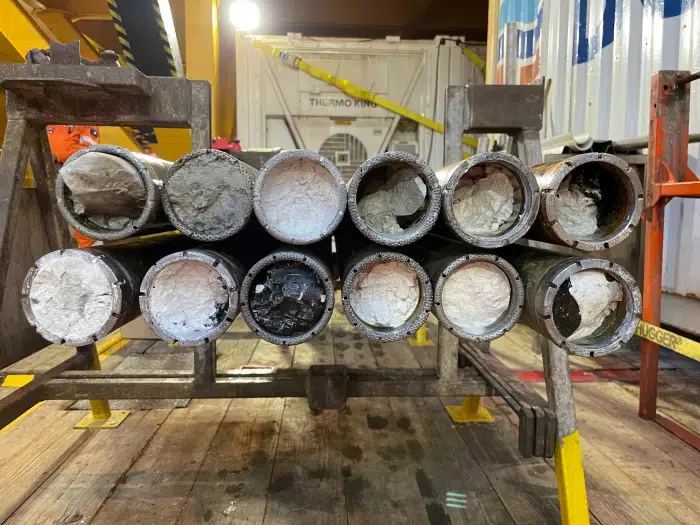
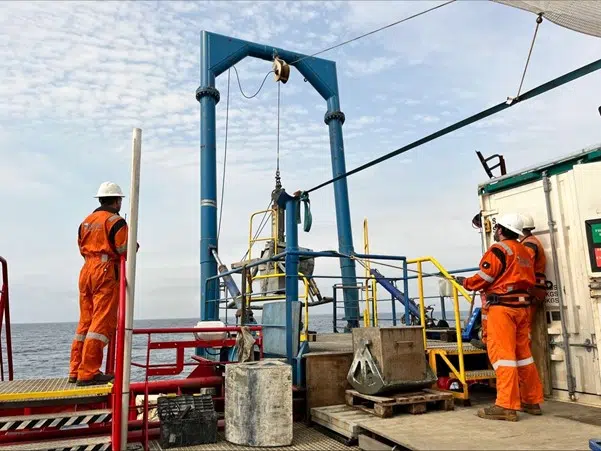
  • Obtaining offshore geotechnical data relies on specialised vessels
  • Limited availability of these vessels impacts data collection efficiency
  • Onshore soil testing laboratories also play a crucial role but may have capacity.

Need support? Get ahead of the game with combined geophysical and geotechnical surveys.

Watch our webinar

Q. How can challenging soil conditions impact the cost and timelines of projects and how can this be managed?

A. During development, one of the most significant risks is foundation installation. Offshore renewable projects often face unexplored soil conditions that can pose unique challenges. 

  • Following traditional installation methods without careful consideration can heighten overall development risks. There are instances where the chosen foundation design, relying solely on its in-place performance, may prove impractical or excessively costly and risky to install.  
  • Acteon, through 2H, collaborates with customers early in the process to assess installation performance and feasibility of concept foundation designs alongside the in-place design. This approach is crucial for project success and adherence to schedules. 

Weigh up all the relevant factors to make the best choice.

Read our blog

Is there anything that can be done through data acquisition to minimise ground condition related risk?

Understanding the complexity of ground conditions in relation to engineering challenges is crucial. Data acquisition and subsequent onshore laboratory testing should address both in-place and installation design requirements. Unfortunately, the latter often gets overlooked. For example, in installation analysis, there tends to be a greater emphasis on soil behaviour after reaching peak conditions rather than the peak conditions themselves that are utilised in in-situ analysis.

  • Involving experienced design engineers in data acquisition is essential. 
  • We assist our customers during data acquisition while the vessel is still in the field. This helps identify potential in-place or installation risks for foundations and allows us to recommend adjustments to mitigate uncertainties or concerns before the vessel departs the site.  
  • This approach significantly reduces project and design risk while minimising survey costs. 

Get a data acquisition and laboratory testing integrated solution to minimise risk.

Download our brochure

Q. What measures can be taken to ensure the optimal selection of installation methodology and equipment?

A. Early planning during development, considering suitable methodologies, equipment, limitations, challenges, and associated risks is crucial for informed decision making. This includes the structural performance of the foundation solution. 

  • As project knowledge grows, covering soil conditions, foundation type and size, fabrication, transport, installation methods and vessel size, the most efficient development solution can be defined.
  • Installation performance and risk profile often dictate the foundation type. For instance, floating wind anchors prioritise efficiency, which must be integrated into the installation methodology. Despite smaller geotechnical foundation sizes, the scale remains substantial, with floating wind turbines having three to six anchors each. 

Learn more about anchor selection for floating wind.

Read our blog

mail whatsapp